Siding Repair vs Replacement: How to Decide
Updated November 2, 2026 · US homeowners
A cracked board does not automatically mean you need new siding on the whole house. Equally, replacing a visible panel will not resolve a leak behind it. Start by separating the damaged surface from the cause, the condition of the wall and the practical limits of matching the existing product.
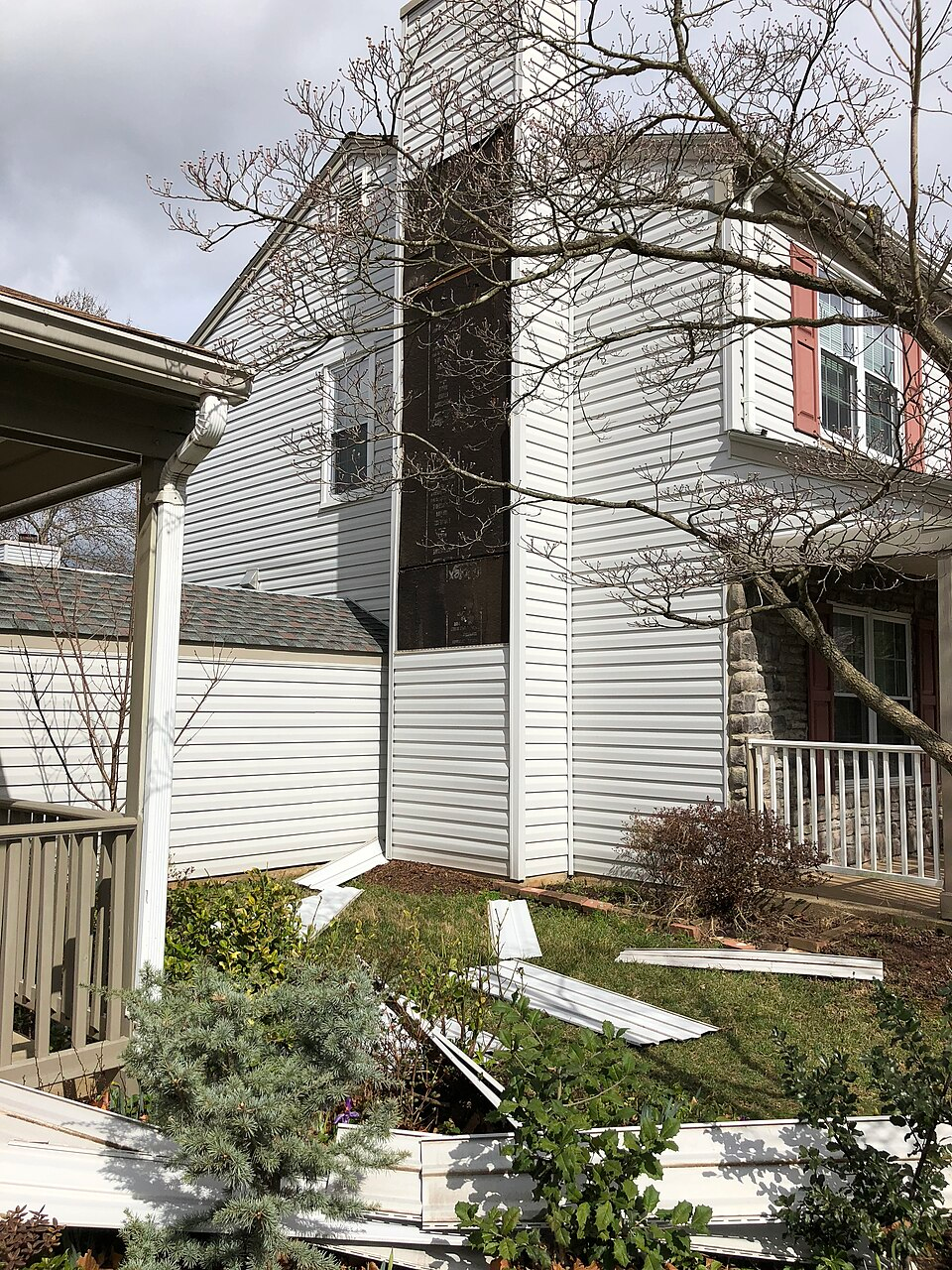 View photo
This photograph documents wind-damaged siding in Fairfax County, Virginia, in March 2018. It does not establish the material, hidden wall condition or appropriate repair scope.
Photo: Famartin / Wikimedia Commons · CC BY-SA 4.0. Cropped in the page frame; the viewer shows the full image. Independent example, not our project.
Ask about a local repair when damage is limited, a compatible replacement is available and the surrounding wall is sound. Compare an elevation or full replacement when damage is widespread, failures keep returning, matching is impractical or correcting the wall requires extensive removal. An on-site assessment should establish which conditions apply.
Plan your project & request siding quotes ↓
Repair, one wall or full replacement?
Ask the contractor to explain the smallest scope that will solve the underlying problem, then price realistic alternatives. A repair can be sensible even on an older house; a relatively new installation can still need substantial correction. Age alone is a poor substitute for inspecting the actual assembly.
A practical decision path
Active water entry, loose material at height, visible wall movement or suspect older materials → arrange an appropriate professional assessment before disturbing the siding.
If yes, check product compatibility and the repair method. If no or unknown, establish the extent of the wall problem before choosing a finish.
If yes, compare a local repair. If no, compare replacing a complete elevation. Repeated or extensive failures justify a whole-house comparison.
Original planning diagram. These are discussion prompts, not an inspection or a rule based on a percentage of damaged siding.
A limited area, a compatible product and a repair that addresses the cause.
A complete wall may offer a practical finish transition when a small patch cannot match.
Compare when failures affect multiple areas or a larger wall-system correction is needed.
For a phased project, agree where the work stops, how corners and openings will be finished, and whether later stages can connect without undoing new work. One wall is not automatically a viable standalone job.
What the warning signs mean
Take photographs from a safe ground-level position: an overview of each affected wall and closer views of visible defects. Note whether the issue followed a storm, appeared gradually or returned after earlier work. Do not remove panels or probe unknown materials just to collect evidence.
| What you notice | What to ask | Possible direction |
|---|---|---|
| One cracked or missing piece | Is the surrounding material sound, and can a compatible piece be installed? | Investigate a local repair. |
| Buckling or repeated loose panels | What caused the movement, and does it affect other areas? | Correct the cause; compare the required removal scope. |
| Stains or deterioration near openings | Are flashing, drainage and concealed materials affected? | Assessment before a cosmetic patch. |
| Faded color or worn paint | Is the cladding intact and suitable for manufacturer-approved maintenance? | Compare maintenance with replacement. |
| Widespread damage or recurring failures | Can targeted work deliver a durable result? | Price elevation and full replacement alternatives. |
A stain is not proof of rot, and a dent is not proof of a leak. Ask for photographs and a written explanation of any concealed problem found during an authorized inspection. Keep the appearance decision separate from the weather-protection decision.
 View photo
Missing siding photographed on Big Pine Key after Hurricane Irma in September 2017. Ask a contractor to assess the exposed assembly and adjoining areas; the photograph alone cannot determine their condition.
Photo: Dan Chapman / USFWS, via Wikimedia Commons. Public domain. Independent example, not our project.
How the material changes your repair options
Vinyl siding: check the profile and locking connection
The Vinyl Siding Institute manual describes replacing individual damaged panels. That makes selective replacement a real option, but your installer still needs to identify a compatible panel, check surrounding pieces and follow the product instructions. A similar color does not establish that two profiles lock together correctly.
Ask to see the proposed replacement against the existing wall in daylight. Weathering may make a small patch conspicuous. If the match is unacceptable, compare the cost and detailing of a whole elevation rather than assuming the entire house must be re-sided. See our vinyl siding guide.
Fiber cement: separate finish damage from damaged boards
James Hardie describes repairs for small chips, cracks and dents in its products, alongside product-specific finishing guidance. That is not blanket approval to patch every broken board or use the same method on another brand. Ask whether the proposal addresses a minor surface defect or replaces a damaged piece, and how the finish will be restored. See the fiber-cement guide.
Wood and engineered wood: identify what has deteriorated
Ask whether damage affects only the coating or the board itself, how far it extends and what is keeping the area wet. Painting a visibly damaged area does not establish that the substrate is sound. For LP SmartSide, LP distinguishes small paint imperfections that can be touched up and recommends managing gutters and sprinklers to avoid ongoing water contact. Use the instructions for the actual installed product.
For natural wood, matching the species, thickness and profile matters as well as color. Keep records of any stain or paint selected for the repair. Compare our wood and engineered-wood guides.
Steel and aluminum: ask about the panel system
Have the contractor identify the metal, profile, finish and attachment system before pricing a replacement piece. Ask how an isolated panel would be accessed, whether adjacent panels must be removed, and how coating damage and cut edges would be handled under the manufacturer’s instructions. A surface mark and a damaged connection are different scope questions.
For seamless steel siding, ask whether compatible equipment and coil stock are available for the existing profile. Do not assume a generic stock panel will match. Keep repair prices separate from whole-house installation benchmarks in our metal siding cost guide.
Brick veneer: assess the masonry and wall together
Ask a qualified masonry contractor to explain cracked units, mortar deterioration or movement before choosing repointing or replacement. Do not treat cracking that may involve the wall assembly as a siding-only cosmetic job. Our brick-veneer guide explains the distinction between the facing and the supporting wall.
Check the wall behind the siding
The Department of Energy explains that water can pass through exterior cladding and that the drainage layer and flashing behind it must direct that water away. The visible finish is therefore only one part of the repair discussion. A quote should explain whether work includes the water-resistive barrier, opening details and damaged sheathing, or only replacement cladding.
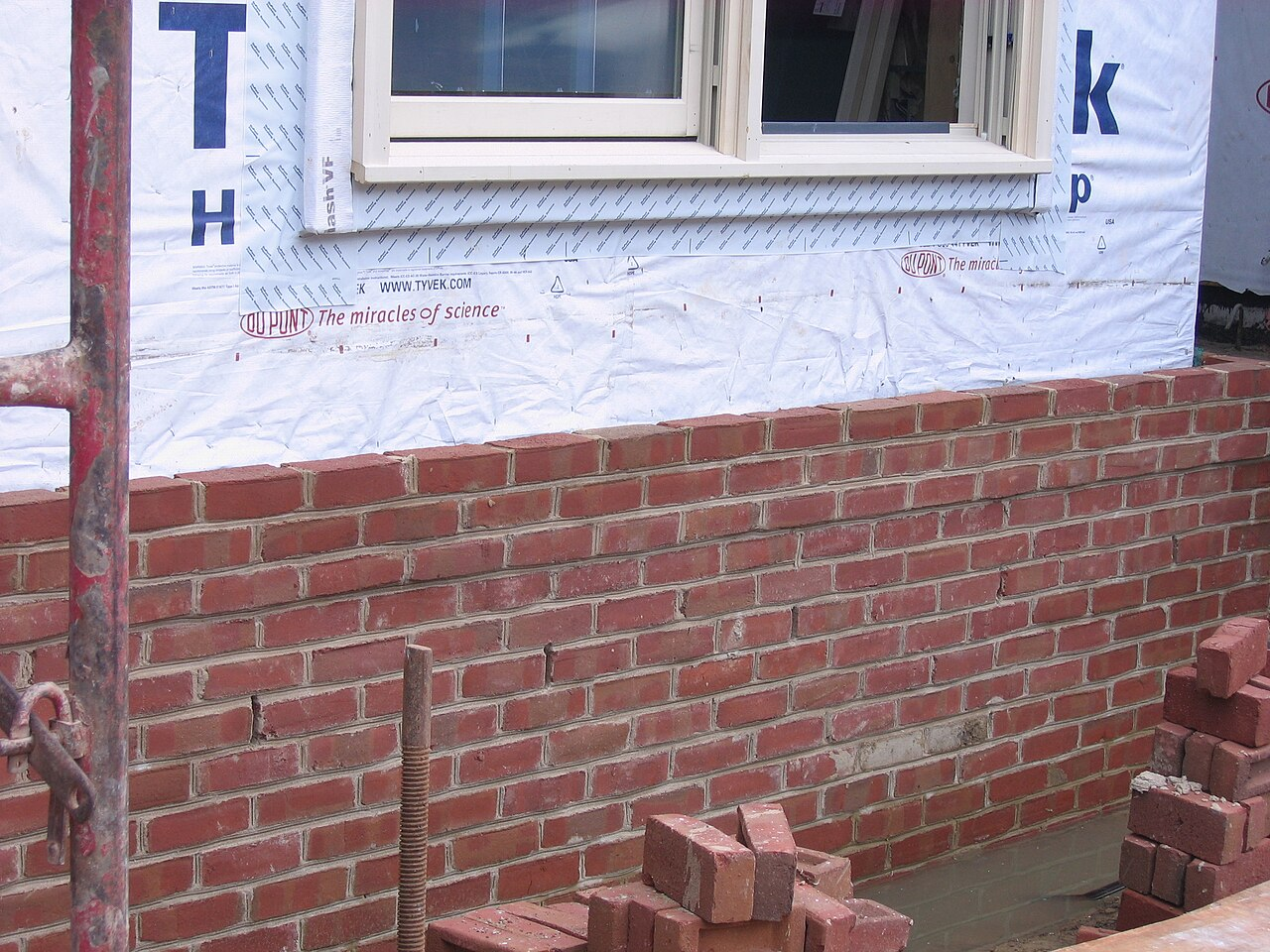
This construction example shows a brick facing and the barrier behind it. It illustrates separate scope items, not a diagnosis of a damaged home or an installation specification.
Photo: Bricktrimble / Wikimedia Commons · CC BY-SA 4.0.
If opening the wall is necessary, agree where the inspection starts, what permission is needed to expand it, and how findings will be documented. Ask for an allowance or unit rate for additional repairs and a written change-order process. An undefined “repair as necessary” clause makes competing bids harder to compare.
If siding may contain asbestos, do not cut, sand or remove a sample yourself. EPA recommends assessment and sampling by trained, accredited professionals when suspect material is damaged or renovation would disturb it. For work that may disturb lead paint in a pre-1978 home, EPA recommends a lead-safe certified contractor. Discuss these questions before removal begins.
Compare the complete project cost
A small repair and a full installation cannot be compared by multiplying the same square-foot rate. A limited job may still require a site visit, access equipment, product sourcing, removal and finish work. A larger project adds area but may also include wall preparation and details excluded from a panel-only quote.
Request separate totals for each feasible option, with the same assumptions about the wall. Our siding cost guide provides replacement-budget context; local written estimates should establish the price for your repair.
Product, quantity, removal, trim, access and finish matching.
Inspection, flashing, barrier repairs, sheathing and agreed contingencies.
Workmanship terms, care requirements and the likely next maintenance task.
For example, a small vinyl patch may be the most proportionate option when a compatible panel exists and the wall is sound. If that patch cannot match acceptably, the useful comparison may be one wall versus the patch—not automatically a whole-house replacement. If inspection finds a wider drainage problem, revisit all three scopes using the new information.
There is no universal rule that repair becomes uneconomic at a particular percentage of replacement cost. Compare what each option fixes, what remains, how long you expect to keep the home and the uncertainty in the quote. Before committing to work, preserve photos and check any applicable product or workmanship warranty procedures. Do not assume a warranty pays all labor or consequential repairs.
Questions to ask before approving the work
- What caused the damage? Ask the contractor to distinguish a finding from an assumption.
- Why this scope? Request an explanation of why a local repair, an elevation or full replacement is appropriate.
- What product will be used? Record the material, profile, dimensions, finish and compatibility.
- What happens behind it? Specify inspection, barrier and flashing work, and additional repair rates.
- What will the repair look like? Agree a sample or matching expectation before ordering.
- What happens if more damage is found? Set the approval and documentation process.
- What is covered afterward? Separate the product warranty, finish warranty and contractor workmanship terms.
Use our contractor estimate checklist to turn those answers into a consistent brief. If replacement is the better option, the siding buying guide helps compare materials without losing sight of the complete wall assembly.
Plan your siding project
Bring a clear brief to your first contractor conversation.
Your home, your material choices, your scope.
- 01Describe the work
Installation or repair? List the walls, visible issues and photos to discuss.
- 02Choose your starting options
Note preferred materials, profiles and finishes. Ask about suitable alternatives.
- 03Compare a complete scope
Check removal, wall preparation, trim, repairs and warranty coverage.
Tell us about your installation or repair project using the quote request form. Contractor availability depends on your location and scope.
Common siding repair questions
Can I replace just a few pieces of siding?
Sometimes. The material must support a suitable repair method, compatible pieces must be available and the surrounding assembly must be sound. Check appearance as well as fit before approving the work.
Does faded siding need replacing?
Fading by itself does not establish failure of the wall. Ask whether the issue is cosmetic, what maintenance the manufacturer permits and whether other defects are present. A color change may still be a personal reason to replace sound siding.
Can I replace just one side of the house?
It may be practical if the work can terminate correctly at corners and openings. Compare matching, drainage continuity and later phases with the contractor. A complete elevation is a scope option, not a universal recommendation.
Should I replace siding because it is old?
Use age as background information, not a decision rule. Actual condition, failure history, product availability and the cost of a durable repair are more useful questions.
Will a repair match perfectly?
Do not assume it will. Ask to compare a physical sample against the existing wall and agree acceptable variation. A discontinued profile or aged finish can change the most practical scope.
Sources and editorial method
View sources and pricing methodology
Prepared October 28, 2026 for US homeowners. This guide combines manufacturer and government guidance with editorial planning questions. It is not based on a site inspection, does not diagnose the photographed properties and makes no claim of hands-on product testing. No national repair price or percentage threshold is presented as a quote.
- Vinyl Siding Institute installation manual — individual-panel replacement and manufacturer instructions.
- James Hardie FAQs — product-specific repair and finish guidance.
- LP SmartSide care and maintenance — inspection, paint touch-up and drainage.
- US Department of Energy: Water Managed Walls — drainage layers and flashing behind cladding.
- EPA: Protect Your Family from Exposures to Asbestos and Lead-Safe Renovations — assessment before disturbing older materials.
Manufacturer recommendations apply to their specified products. Confirm current instructions for the installed material and the proposed repair. Photograph credits and reuse terms appear with each image.