How to Choose Siding for Your Home: Materials, Budget and Maintenance
Reviewed October 19, 2026 · US homeowner buying guide
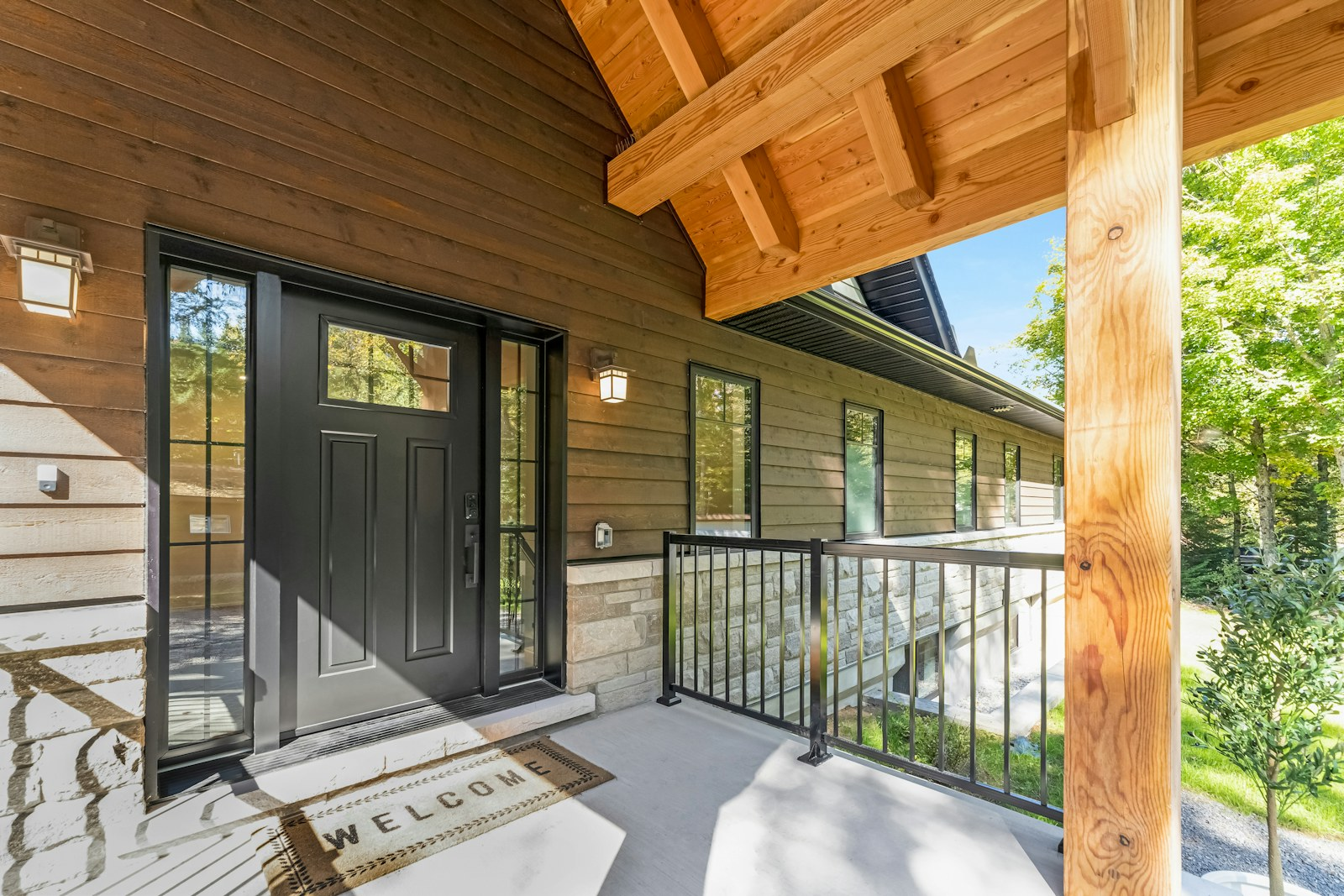
Hero: exterior design inspiration; the pictured cladding material is not verified. Photo: Eli Chamoun / Unsplash.
Choosing siding is easier when you separate three decisions: what your house needs, which appearance you prefer, and what the complete project will cost. Start with two suitable materials, then compare named products and matching installation scopes. This guide helps you build that shortlist without treating one material as the best answer for every home.
Start with the decision you need to make
Write down why you are changing the siding. Replacing widespread damage is a different brief from refreshing a sound exterior or choosing cladding for a new addition. If the problem involves recurring moisture, ask a qualified contractor to investigate the cause before pricing a cosmetic replacement. Covering an unresolved problem is not a complete repair plan.
Next, choose your two main priorities. They might be keeping the initial cost manageable, achieving a particular architectural style, reducing finish work, or matching an existing wall. Treat mandatory site requirements as a first filter rather than something you can trade against appearance.
Compare complete installed options
Start with a local vinyl proposal and one alternative you like. Hold removal, wall repairs and trim scope constant so the material saving is visible.
Choose a profile, then a material
Decide whether you want horizontal courses, vertical lines, shingles or a masonry appearance. Several materials can create similar patterns.
Ask for the actual care plan
Compare cleaning, finish inspection, touch-ups and eventual refinishing. Include the difficulty of reaching upper walls.
Check suitability before styling
Ask about wind exposure, coastal conditions, moisture details and any local requirements. Obtain product-specific evidence for the proposed system.
Your output: a short brief such as “replace all existing siding, keep the horizontal appearance, compare two installed options, and minimize future painting.” That gives contractors something useful to price.
Compare the material families
The table below is a selection aid, not a performance ranking. Products within each family differ, and an installation system can matter as much as the visible surface. Follow the linked material guides when an option reaches your shortlist.
| Material | When to investigate it | Question before choosing |
|---|---|---|
| Vinyl | You want to explore horizontal profiles and an option without a routine painting plan for the original surface. | Which exact panel, trim package and documented wind suitability are included? |
| Fiber cement | You like painted plank, panel or shingle designs and want to compare factory-finished and site-painted specifications. | What finish work, product clearances and future coating care apply? |
| Wood | Natural wood grain and a specific species or finish are central to the design. | Which species, grade and coating system are priced, and how will exposed walls be maintained? |
| Engineered wood | You want a manufactured wood-based product in a named plank, panel or shake range. | What edge treatment, finish maintenance and warranty conditions apply to that product? |
| Steel or aluminum | A metal panel or pronounced vertical seam is part of your preferred exterior. | Which metal, coating, fasteners and repair method suit the site? |
| Brick veneer | You want a masonry appearance for a full wall or selected accent area. | Is the proposal for thin brick or full-size veneer, and what support and drainage design is required? |
Keep the shortlist small. Comparing six broad material names usually produces more questions than answers; comparing two named product systems lets you review samples, care instructions and complete quotations in enough detail to decide.
Budget for the wall, not just the panel
Use our siding installation and replacement cost guide for national planning benchmarks, then obtain local prices for your actual scope. A whole-house total depends on exterior wall area, access, corners, openings, preparation and the selected finish. Indoor floor area is not the quantity of siding you need.
- 01
Visible exterior
Siding, trim, corners, starter pieces, finish and accessories.
- 02
Work behind the surface
Removal, disposal, wall preparation, identified repairs, weather barrier and flashing work.
- 03
Installation and access
Labor, scaffolding or lifting equipment, fixture handling and protection of the property.
- 04
Allowances and other charges
Taxes, applicable permits, agreed exclusions and a written process for unexpected repairs.
Ask each bidder to distinguish included work from allowances. An allowance for concealed damage is not the same as a fixed price to replace all damaged sheathing. Agree how findings will be photographed, priced and approved before extra work proceeds.
A useful comparison example
Suppose Proposal A is $18,000 and Proposal B is $21,000. If A excludes removal and B includes removal plus a defined trim package, the $3,000 difference does not establish the material premium. These are fictional figures to explain the comparison, not market estimates. Ask both contractors to price the same base scope and show product upgrades separately.
If the preferred option exceeds your budget, investigate a simpler profile, fewer accent areas or another product line. Keep essential preparation and water-management work in the brief. Reducing decorative complexity is easier to evaluate than accepting an unclear repair scope.
Check the house and location before ordering
Your contractor should assess the existing wall, openings and transitions. PEPA explains that vinyl cladding is not itself the water-resistive barrier, and identifies flashing, barrier material and sheathing as parts of the wall system. Ask how the proposed assembly manages water rather than accepting a promise that the new surface will make everything waterproof.
Weather and exposure
Ask the installer to identify product documentation relevant to the location and exposure. A generic “weather resistant” description is not a substitute for the exact product specification.
Existing wall condition
Discuss damaged areas, uneven surfaces and the proposed removal or over-cladding approach. Ask what inspection is possible before work starts and what will remain unknown until removal.
Height and complexity
Gables, dormers, porches and numerous openings affect layout and access. Request a marked-up elevation showing material changes and trim treatment.
Approval constraints
Confirm whether local approvals, design restrictions or association approval apply to your project. Settle these before committing to a color or paying for an order.
For a coastal site or another demanding location, ask a focused question: “Which document confirms that this panel, coating and fastening specification is suitable here?” Let the answer determine the shortlist. Do not assume every steel panel, vinyl profile or fiber-cement product has interchangeable performance.
Compare siding on real homes
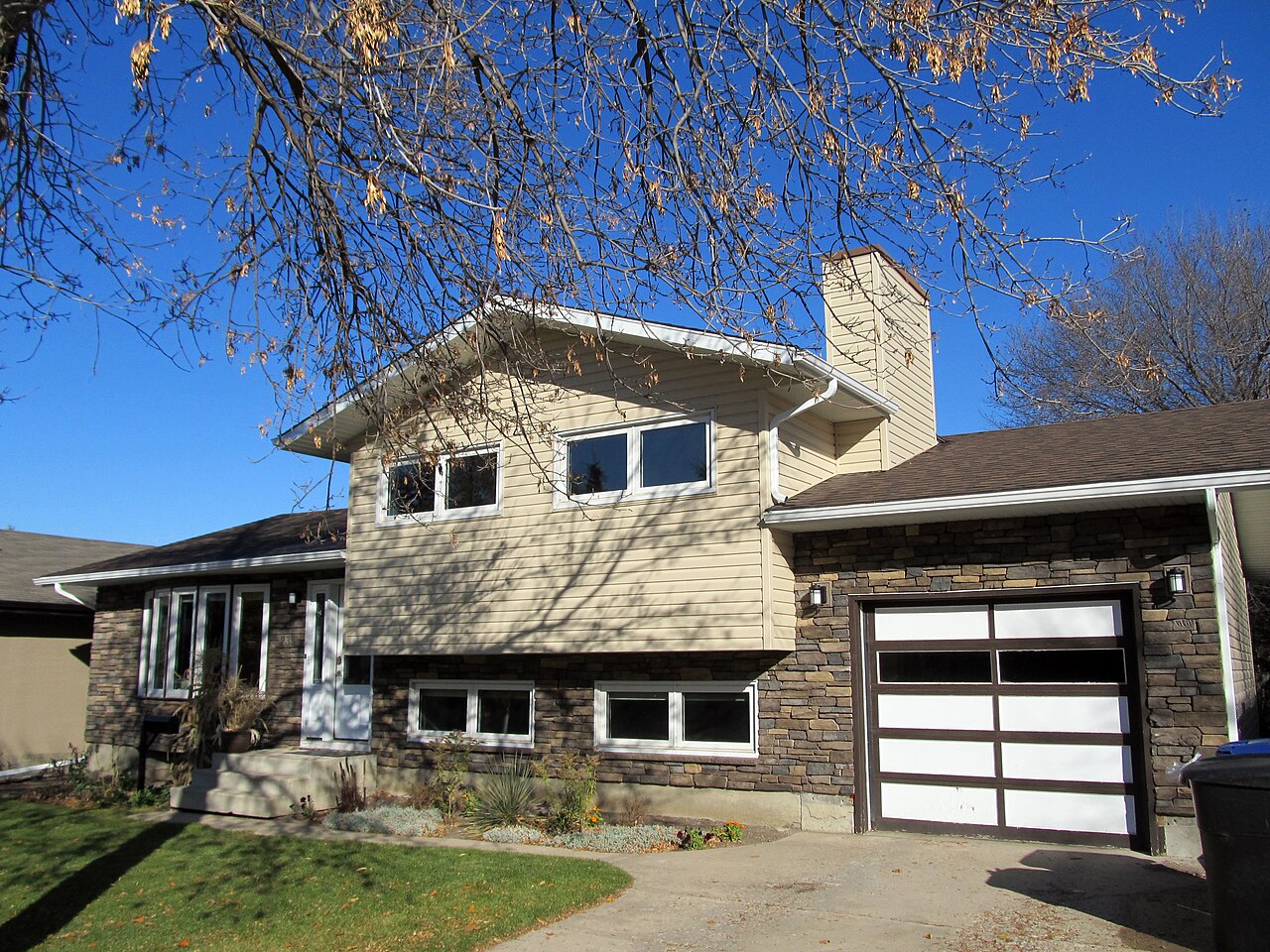
Use photographs to compare appearance, then review a physical sample of the product you are considering. Select a photo for a larger view without leaving this guide.
 View larger photo ↗
A real exterior identified by its photographer as vinyl siding and stone. Compare the complete elevation and the change of material.
Photo: daryl_mitchell / Wikimedia Commons · CC BY-SA 2.0. Displayed in a cropped frame; larger view shows the full photograph.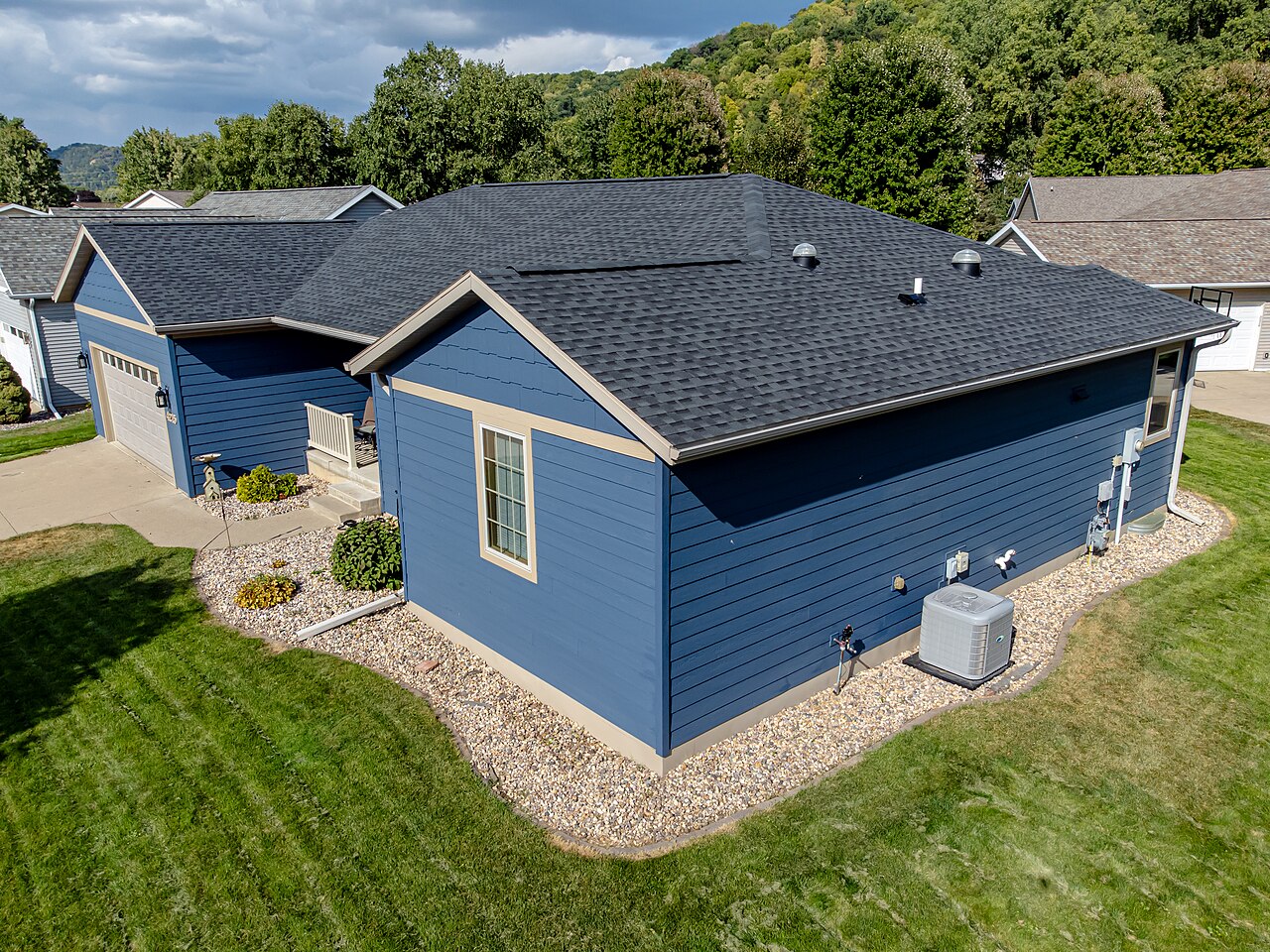 View larger photo ↗
The source identifies this blue exterior as fiber cement; the product line is not supplied.
Photo: Wikideas1 / Wikimedia Commons · CC0 1.0. Displayed in a cropped frame; larger view shows the full photograph.These are independently sourced examples, not projects completed by Siding Cost Guide or an endorsement of a particular installer. Material identification follows the source description.
Separate the material from the visible pattern
A profile is the shape and repeated pattern you see on the wall. Choosing horizontal siding does not automatically mean vinyl; choosing a wood-like texture does not establish that the product is natural wood. Review the exact material and profile together.
Horizontal courses
Review exposure, shadow lines and joints.
Vertical lines
Plan alignment at windows and gables.
Small repeated units
Compare shingle or masonry layouts.
Simplified pattern diagrams only; these are not product sections or installation details.
Take physical samples outdoors and compare them against the roof, windows, masonry and front door that will remain. Review them in different light. A phone rendering can help with layout, but use the actual sample for the final color decision.
Ask to see a completed installation of the exact product if practical. Notice corner pieces, joints, the space around windows and transitions to other materials. An attractive sample can still lead to a disappointing result if the trim package or repeated course size has not been considered.
For mixed materials, draw a clear boundary: main walls in one specification, an entrance or gable accent in another. Ask for the accent as a separate price and confirm how the junction will be detailed. Keep the drawing with the final proposal.
Compare the maintenance you will actually arrange
“Low maintenance” should start a conversation, not end it. Request the current care instructions for the named product and finish. Ask what routine inspection, cleaning, touch-up and eventual coating work you should expect, and which tasks require professional access equipment.
Manufacturer guidance demonstrates why a single cleaning rule is unreliable. James Hardie recommends gentle cleaning with a low-pressure hose and suitable soft brush for its siding. LP SmartSide guidance calls for periodic inspection and warns against pressure washing. These are examples for those manufacturers’ products, not instructions for every siding material.
Build a care folder
- Exact product and color references
- Current care and finish instructions
- Product, finish and workmanship warranties
- Supplier and installer contact details
Ask about a single damaged area
- Can an individual section be replaced?
- How will a new piece match the existing finish?
- Would spare material be useful?
- What access will repairs need?
A warranty length alone does not settle the choice. Check who provides cover, whether labor is included, how finish coverage differs from the substrate, and what installation or maintenance conditions apply. Save the version supplied with the purchase.
Turn two options into comparable quotes
Send the same brief to each contractor. Ask for the named product, coverage area, profile, color, trim, preparation, installation and exclusions in writing. If a company proposes an alternative, ask it to explain the difference and price it as an option.
- 01
Set your base specification
Identify the walls, preferred appearance, two materials and finish choices.
- 02
Resolve scope differences
Compare removal, repairs, flashing, accessories and access before judging totals.
- 03
Choose the product and installer together
Review samples, relevant completed work, written terms and the plan for concealed findings.
Use the contractor estimate checklist during your final review. Keep unresolved items on a written list and obtain answers before placing the order. A cheaper quote with missing work is not a reliable saving; a higher quote should explain what additional value you are receiving.
Ready to plan your siding project?
Have your ZIP code, the type of work and your preferred materials ready. You do not need a final color choice to begin discussing the scope.
The estimate form is provided by Networx. Contractor availability and project eligibility vary.
We may receive compensation for qualifying referrals. See our referral disclosure.
Frequently asked questions
What is the best siding material for a house?
There is no universal winner. A useful shortlist meets the site requirements, installed budget, appearance and care expectations. Compare specific products and contractors instead of relying on a material label alone.
Should I choose the cheapest siding quote?
First confirm that the quotes cover the same work. Compare the named product, preparation, trim, finish, access and exclusions. Then decide whether an upgrade or a different installer offers value for your project.
Can I use more than one siding material?
Yes, but ask for a drawing showing the boundaries and a specification for the transitions. Separate the accent price so you can judge its effect on the budget.
How much siding does a 2,000-square-foot house need?
Floor area alone cannot tell you. The exterior wall measurements, stories, gables and openings determine the coverage calculation. Ask the contractor to state the measurement basis and waste allowance.
Does new siding remove the need for a weather barrier?
Do not assume that it does. Ask for a complete wall-system specification suitable for the product and location. PEPA specifically distinguishes vinyl cladding from the water-resistive barrier behind it.
Sources and editorial approach
Reviewed October 19, 2026. This is an editorial buying framework, not a hands-on product test or engineering specification. The example quote totals are fictional. Manufacturer care examples apply to the named brands; follow the instructions for the product you buy.
- PEPA: cladding and water-resistive barrier guidance
- PEPA: project measurement and wall-system planning
- James Hardie: siding cleaning guidance
- LP Building Solutions: SmartSide care and maintenance
Material comparisons, sample-review questions and quote checklists are our planning suggestions. Read the individual material guides for further sources and specification questions.