Vinyl Siding: Costs, Profiles & Buying Guide
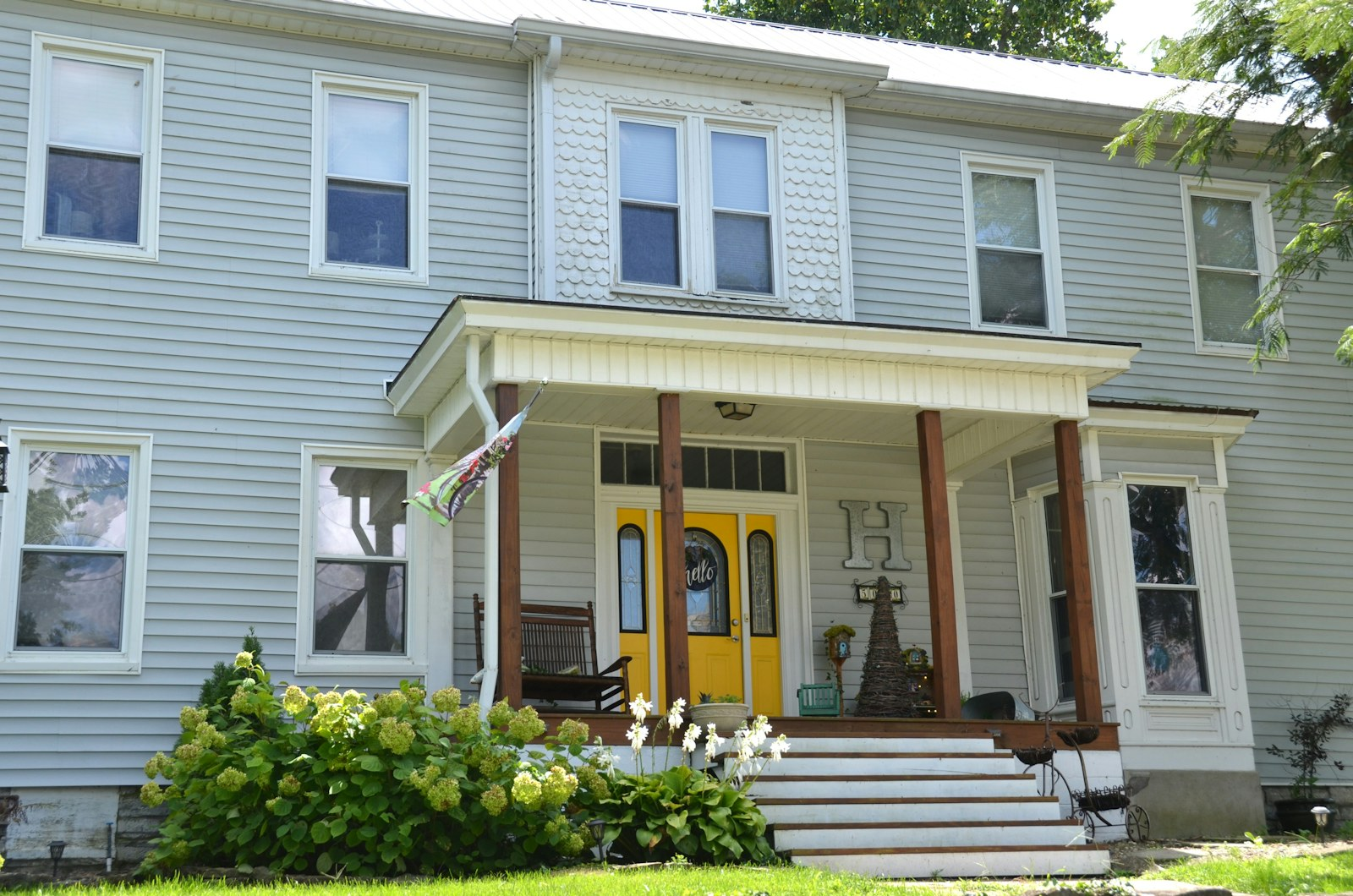
Compare exact profiles, colors and accessories.
Ask about preparation and opening details.
Save care guidance and warranty information.
Updated October 1, 2026 · US homeowners · Prices in USD
Vinyl is worth considering when you want a practical exterior with a broad choice of profiles. The right decision depends on the specified product, the finished appearance and the installation scope—not simply whether a bid says “vinyl siding.”
Plan your project & request siding quotes ↓
What to compare before choosing
Build a shortlist around three things: your total project budget, the appearance you want from the street, and the upkeep you are prepared to arrange. Ask for physical samples and the exact specification sheet for each option. Small showroom pieces are useful, but they do not show how repeated seams, trim and profiles will look across an entire wall.
Keep the product and installation decisions together. A more expensive panel does not make an incomplete wall preparation plan acceptable. Equally, a basic-looking sample may be entirely suitable if its style, documented performance and complete installation scope meet your requirements.
Vinyl siding costs
Angi’s national siding guide lists vinyl at $3–$12 per square foot. For planning, applying that range to 1,500 square feet of exterior siding area produces $4,500–$18,000. This is our arithmetic illustration of its published benchmark, not a quote or a new project survey.
| Budget item | Confirm in writing |
|---|---|
| Panel specification | Manufacturer, product line, profile and color |
| Accessories | Starter components, corners, trim and fixture details |
| Existing exterior | Removal, disposal and preparation scope |
| Installation | Labor, access equipment and property protection |
| Other charges | Permits, taxes, exclusions and repair allowances |
Benchmark: Angi siding cost guide. Indoor floor area is not exterior siding area. Confirm whether each local rate includes labor and removal before comparing it with this range.
Ask for two alternatives if price is the main concern: your preferred product and a simpler specification covering the same preparation and accessories. This shows the saving from the panel choice without obscuring the cost of the installation itself.
See vinyl siding on real homes
Use photographs to compare appearance, then review a physical sample of the product you are considering. Select a photo for a larger view without leaving this guide.
 View larger photo ↗
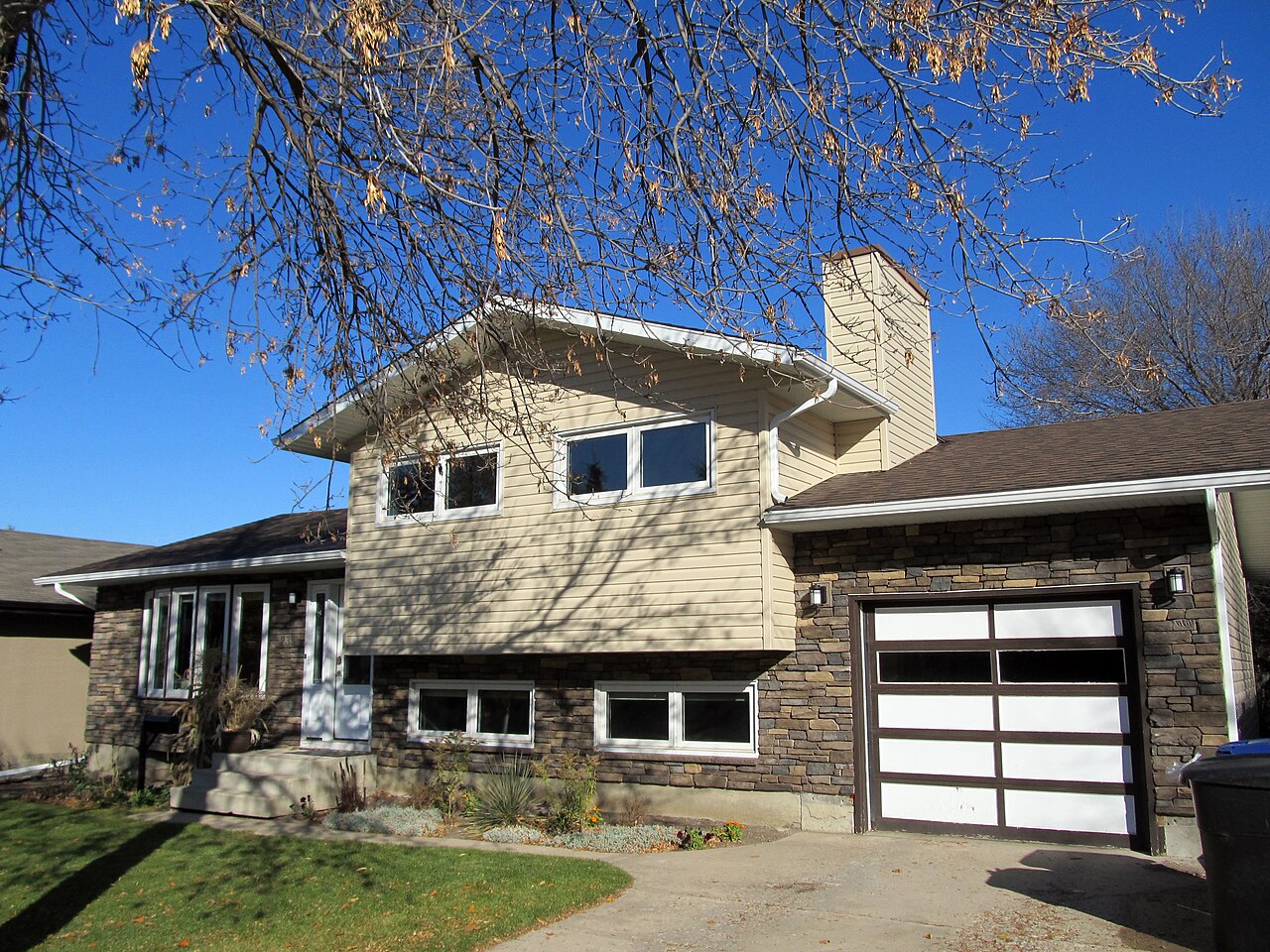
See how horizontal siding works with the roof, garage and stone accents. This Canadian home is identified by the photographer as vinyl siding with stone.
Photo: daryl_mitchell / Wikimedia Commons · CC BY-SA 2.0. Displayed in a cropped frame; larger view shows the full photograph.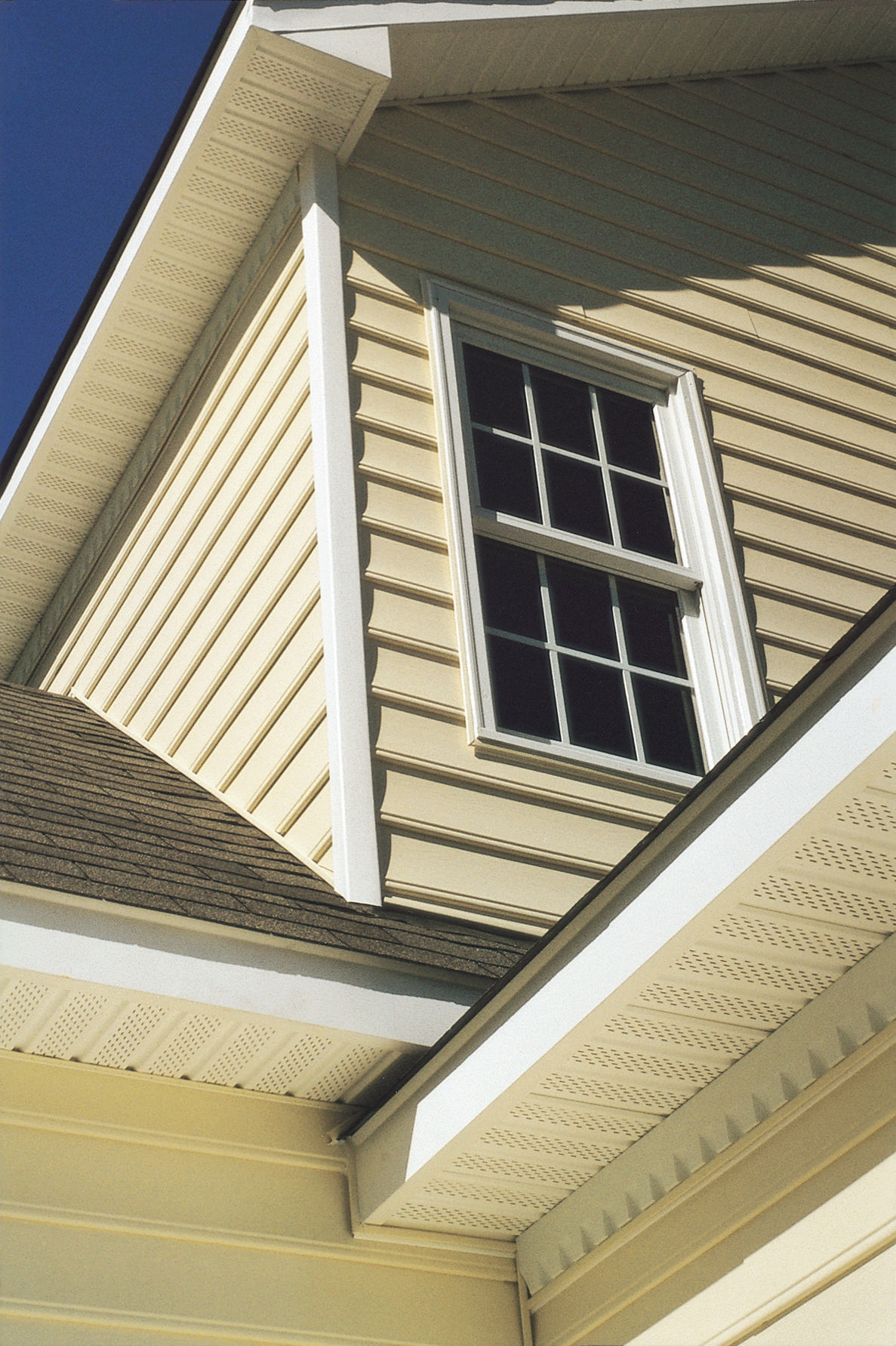 View larger photo ↗
Review the repeated shadow lines and the transition to white trim. The source identifies the cladding as vinyl; the manufacturer and product line are not specified.
Photo: Peter Rockwood / Wikimedia Commons · CC BY-SA 4.0. Displayed in a cropped frame; larger view shows the full photograph.These are independently sourced examples, not projects completed by Siding Cost Guide or an endorsement of a particular installer. Material identification follows the source description.
Profiles and appearance
Profile describes the visible shape of the siding. Product catalogues include horizontal clapboard, Dutch lap and beaded options; CertainTeed’s MainStreet range is one example. Availability varies by product, so ask to see the exact profile being quoted.
| Design decision | How to review it |
|---|---|
| Horizontal profile | Compare a full panel and its shadow lines, not just a color chip. |
| Exposure or course size | Ask how the repeated lines will align with windows and trim. |
| Color | View the sample outdoors against the roof, masonry and window frames. |
| Corners and openings | Confirm the trim color and shape rather than leaving them unspecified. |
| Accent areas | Request a drawing showing where a different texture or orientation begins. |
For a restrained design, choose one main profile and decide deliberately where any accent belongs. If you want different treatment on a gable, request separate prices for the accent and the main walls. This lets you evaluate the design without making the entire quote harder to compare.
Standard and insulated products
Ask whether the quote is for conventional siding or an insulated product, and obtain the product-specific performance information. If energy savings influence your decision, ask how the proposed wall assembly changes and what evidence supports any savings claim. Do not assume a product name establishes the performance of the whole house.
A repeating horizontal lap appearance.
A shaped upper edge creates a pronounced shadow line.
A narrow bead detail accents the lower edge.
Installation questions that matter
PEPA’s installation guidance explains that vinyl panels need room to move and that the cladding is not itself the water-resistive barrier. The wall assembly must manage water behind the visible surface. Local requirements and the selected manufacturer’s instructions govern the work.
- How will the installer verify that the existing wall is suitable?
- What weather-barrier and flashing work is included?
- How will corners, windows, doors and utility penetrations be detailed?
- Is the chosen product suitable for the site’s wind exposure?
- Which product instructions will the crew use?
Keep this as a contractor discussion, rather than a generic do-it-yourself recipe. Fastening, clearances and accessories are product-specific. Request photographs of work that will be concealed so you have a record of the prepared wall and opening details.
Sheathing, weather barrier and opening details need an agreed scope.
Confirm who handles flashing, trim and penetrations.
Maintenance and repairs
PEPA recommends gentle cleaning and warns that abrasive cleaners or stiff brushes may alter the surface appearance. Start with the manufacturer’s care instructions for your exact product. Keep a copy alongside your invoice and warranty.
Make a simple exterior checklist: note visible damage, loose sections, staining and any change near openings. Photograph concerns with the date and location. Ask the installer which observations need prompt attention and which are normal characteristics of the chosen finish.
For a damaged section, establish whether matching panels and trim are available before accepting a repair proposal. Request a sample against the existing wall. Decide how you would handle a visible mismatch: a local repair, a larger wall section or a broader replacement. The choice depends on appearance and condition, not just the size of the broken piece.
Vinyl or fiber cement?
Use matching local quotations to judge the tradeoff. The national benchmarks in our cost guide put vinyl below fiber cement at the lower end, but the ranges overlap. Product grade and scope can change the outcome.
| Priority | Question to settle |
|---|---|
| Upfront budget | What is the complete installed total for each option? |
| Appearance | Which sample and completed local installation do you prefer? |
| Ongoing care | What cleaning, finish and inspection plan applies to the actual product? |
| Repairability | Can a damaged section be replaced and matched? |
| Warranty | What is covered by the product maker and by the installer? |
Read our fiber-cement siding guide for the alternative specification questions. Avoid deciding from a generic “premium versus budget” label; compare the products you can actually buy and the contractors who will fit them.
Your vinyl siding estimate checklist
- Record the exact product, profile, color and accessory specification.
- Confirm the exterior area and the measurement basis.
- List removal, preparation and moisture-management work.
- Ask who moves fixtures and reinstates them.
- Agree on repair allowances and written change approval.
- Obtain care instructions and both warranties.
Review samples before committing
A useful sample review compares the siding with things that are already staying: roof color, brick or stone, window frames and the front door. Put the sample outdoors and view it at different times of day. Take photographs for your notes, but make the final color decision from the physical sample rather than a phone screen.
Ask to see enough of the panel to judge its visible course size and profile. Hold two choices side by side instead of reviewing them on different days. Note which details you prefer: the depth of the horizontal lines, surface texture, trim proportions and the transition to existing materials.
Keep a written record of the product range, profile, color name and trim choice. Ask the contractor to confirm those details on the order and on the final proposal.
A practical choice between two vinyl proposals
Consider a homeowner comparing two offers for the same walls. Proposal A names the siding and trim but excludes removal. Proposal B includes removal and preparation but uses a different product line. The totals cannot tell the homeowner which is better until those differences are resolved.
Ask each company to price the same product and scope, or to identify its proposed alternative clearly. Then judge whether the alternative gives an appearance or documented feature you value. This is more useful than assuming the more expensive offer is automatically a better installation.
Plan for future repairs
Ask the installer whether a small supply of spare panels and matching trim would be useful and how it should be stored. Save the product identification and supplier details even if you do not keep spare material. If a repair becomes necessary, those records give the contractor a better starting point than a photograph alone.
Agree which fixtures will be removed or worked around during installation. Lights, address numbers and hose connections can interrupt the visible layout. A quick walk-through before ordering helps identify details that otherwise become last-minute decisions.
Plan your siding project
Bring a clear brief to your first contractor conversation.
Your home, your material choices, your scope.
- 01Describe the work
Installation or repair? List the walls, visible issues and photos to discuss.
- 02Choose your starting options
Note preferred materials, profiles and finishes. Ask about suitable alternatives.
- 03Compare a complete scope
Check removal, wall preparation, trim, repairs and warranty coverage.
Tell us about your installation or repair project using the quote request form. Contractor availability depends on your location and scope.
Frequently asked questions
Is all vinyl siding the same?
No. Compare the named product, profile, accessories and documented performance. A broad material label is not a complete specification.
Does vinyl make the wall waterproof?
The visible siding is cladding. The weather barrier, flashing and other wall details must be specified as part of the assembly.
Can a small damaged area be repaired?
Ask an installer to assess the condition and availability of matching pieces. Confirm the finished appearance before agreeing to the repair.
Sources and editorial approach
View sources and pricing methodology
Reviewed October 1, 2026. Pricing is a published national benchmark; the sample budget is our calculation. Technical statements use industry or manufacturer guidance. Selection checklists are our editorial planning suggestions, not a product endorsement.